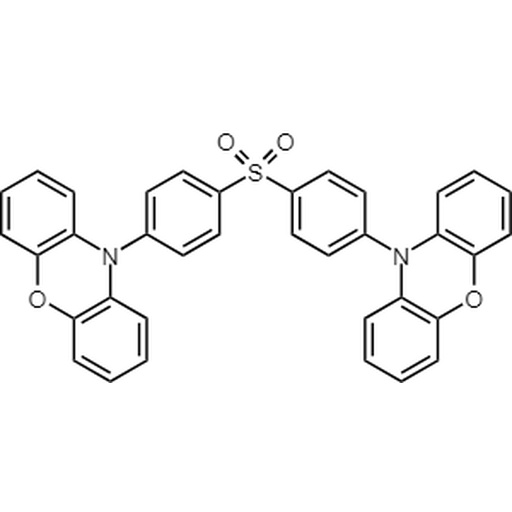
Host Materials in OLED Technology: The Core of Display Innovation
Host materials in the realm of Organic Light-Emitting Diodes (OLEDs) are one of the fundamental components that form the core of OLED displays and lighting systems. The efficiency and performance of OLED devices significantly depend on the development of both emitter and host materials. These materials, typically organic, are crucial in the emissive layers of OLEDs where they host the light-emitting molecules or dopants. The molecular architecture of host materials is intricately designed to facilitate efficient energy transfer to the emitters.
The most important properties of Host Materials for Fluorescent and Phosphorescent OLEDs
- Chemical and Thermal Stability: Host materials should be chemically stable, which is often achieved by using stable chemical structures such as carbazole and phosphine oxide derivatives. High thermal stability is essential to maintain device performance over time. Thermal stability is often characterized by a high decomposition temperature (Td > 400oC) and a high glass transition temperature (Tg > 100oC ).
- Morphological Stability: Stable amorphous morphology is important to prevent phase separation and crystallization, which can degrade device performance. Hosts must form stable and uniform films with surface roughness less than 1.0 nm to prevent current leakage. This stability must be maintained even after thermal annealing processes used during device fabrication.
- Solubility: Hosts should be soluble in alcohol or aromatic solvents to facilitate the solution coating process. Good solubility ensures uniform film formation and adequate thickness of the emitting layer.
- HOMO/LUMO Levels: Hosts should have appropriate LUMO (Lowest Unoccupied Molecular Orbital) and HOMO (Highest Occupied Molecular Orbital) levels to facilitate efficient charge injection and transport. Deep LUMO levels and matched HOMO levels with injecting and transporting materials are crucial for high efficiency.
- Triplet Energy (ET): A high triplet energy level is necessary to prevent back energy transfer from the dopant to the host. This ensures efficient triplet harvesting and emission from the dopant molecules. Typically, an ET of around 3.0 eV is desirable for blue and green TADF emitters.
- Photoluminescence Quantum Yield: Hosts should support a high photoluminescence quantum yield (>95%) of the dopant to maximize the light output of the device.
- Cost-Effectiveness: The synthesis of host materials should be cost-effective, involving fewer steps and readily available starting materials. Modifications to existing materials, like the conversion of mCP to mCPCN, can yield better performance at similar costs.
- Ease of Synthesis and the Structure: Materials that can be easily synthesized and purified are preferred to ensure consistency and scalability in manufacturing. Also the structures of these materials should be as simple as possible to ensure the above properties, which is why small molecules are the most widely used in OLEDs (for example carbazole-based CBP, mCBP and mCP)
Efficiency and Stability: Host materials must balance efficiency and operational stability. High external quantum efficiencies (EQE) and current efficiencies (CE) are critical for commercial viability.
- Compatibility with Emitters: Hosts must be compatible with a range of emitters, particularly the benchmark emitters like 4CzIPN for green and 2CzPN for blue.
These properties ensure that host materials contribute effectively to the performance and longevity of OLED devices, making them suitable for practical applications in display and lighting technologies.
Utilization in the OLED Industry
Host materials play a vital role in determining the efficiency, color spectrum, and longevity of OLED devices. Host materials play a crucial role in OLEDs, especially in enhancing the performance of Thermally Activated Delayed Fluorescence (TADF) emitters. Their ability to control and manage the movement and transfer of energy within the OLED layers directly impacts the device’s performance. From large-scale television screens and smartphones to advanced lighting solutions, the choice of host material is key to the commercial success and technological advancement of OLED products.
Types of Host Materials
Due to the use of host materials, they can be divided into two basic groups: Fluorescent Host Materials (for Fluorescent and TADF OLEDs) and Phosphorescent Host Materials. Depending on the process by which light is emitted from the diode, individual materials must have different properties. Distinctions described below are critical for optimizing the performance and efficiency of each type of OLED.
Fluorescent Host Materials
Fluorescent OLEDs typically do not require as high a triplet energy level as phosphorescent OLEDs because they rely on singlet excitons for light emission. Fluorescent OLEDs also can use hosts with either unipolar or slightly bipolar charge transport properties. The balance of charge transport is less critical compared to phosphorescent OLEDs. While thermal stability and uniform film morphology are important, the requirements are less stringent compared to phosphorescent OLEDs. Stable amorphous morphology is still desired to prevent phase separation and crystallization.
Phosphorescent Host Materials
Phosphorescent OLEDs require host materials with high triplet energy to ensure efficient energy transfer from the host to the triplet emitters and to prevent triplet exciton quenching. The triplet energy of the host must be higher than that of the emitter. Bipolar charge transport properties are crucial to balance holes and electrons in the emitting layer, which improves recombination efficiency and reduces efficiency roll-off in phosphorescent OLEDs. Bipolar hosts help achieve this balance better than unipolar hosts. Host materials for phosphorescent OLEDs need to exhibit high thermal stability with a high glass transition temperature (Tg) to prevent crystallization and maintain a stable film morphology during device operation. A Tg higher than 100°C is preferred.
Industry Applications of Host Materials in OLED Technology
Host materials are pivotal in a wide array of applications within the OLED industry. They are the backbone of the latest generation of OLED displays found in consumer electronics such as smartphones, televisions, and wearable devices, where they contribute to vibrant colors and deep blacks. In lighting technology, these materials enable the production of OLED panels that are not only more efficient but also thinner and more flexible compared to traditional lighting solutions. The choice of host material adapted to—whether fluorescent or phosphorescent OLEDs—directly influences the color rendering, energy efficiency, and lifespan of these OLED applications. Their versatility also extends to specialized fields such as automotive displays, where durability and performance under various lighting conditions are crucial. As OLED technology continues to grow and diversify, the role of host materials in pushing the boundaries of innovation and design in various industries becomes increasingly significant.
In summary, host materials are indispensable in the fabrication of OLED devices. These materials contribute significantly to the performance, efficiency, and quality of OLED displays and lighting systems. As a leading OLED material supplier, Noctiluca is committed to providing top-tier OLED host materials, catering to the evolving demands of the OLED materials market and contributing to the advancement of OLED technology.
Literature:
- Chatterjee, T.; Wong, K. T., Advanced Optical Materials, 2019, 7, 1800565
- Li, W.; Li, J.; Liu, D.; Wang, F.; Zhang, S., J. Mater. Chem. C, 2015, 3, 12529-12538
doi: 10.1039/C5TC02997J.
- Mondal, A.; Paterson, L.; Cho, J.; Lin, K.-H., et al., Phys. Rev., 2021, 2, 031304
doi: 10.1063/5.0049513
Key Host Materials Offered by Noctiluca
Noctiluca offers a wide range of high-quality host materials, each engineered to enhance the performance of OLED devices:
- CBP (58328-31-7): widely recognized for its high triplet energy and good thermal stability. It ensures efficient energy transfer to the guest emitter and balancing charge transport. Used in both fluorescent and phosphorescent OLEDs.
- mCBP (342638-54-4): mCBP features high triplet energy and enhanced thermal stability compared to CBP. mCBP provides improved device performance and stability due to its efficient energy transfer and charge transport properties. Used in both fluorescent and phosphorescent OLEDs
- TPBi (192198-85-9): TPBi is distinguished by its high electron mobility and good thermal stability, which contribute to its effectiveness in OLEDs. It enhances device efficiency and stability. Used in both fluorescent and phosphorescent OLEDs.
- PO-T2T (1646906-26-4): Known for its high electron mobility and thermal stability, PO-T2T exhibits high triplet energy making it suitable for various OLED applications. Used mainly in TADF OLEDs.
- POSTF (1647050-25-6): Widely known for ensuring efficient energy transfer, device longevity and excellent thermal stability. Used mainly in phosphorescent OLEDs.
- DPEPO (808142-23-6): One of the most popular host material with high triplet energy and good thermal stability. Used mainly in TADF OLEDs.
As a Noctiluca, we recognize the evolving needs of the OLED materials market and provide tailored solutions for host materials. If you do not find what you are looking for on our site, please do not hesitate to contact us. We are more than happy to discuss custom solutions and how we can meet your specific needs in the OLED industry.
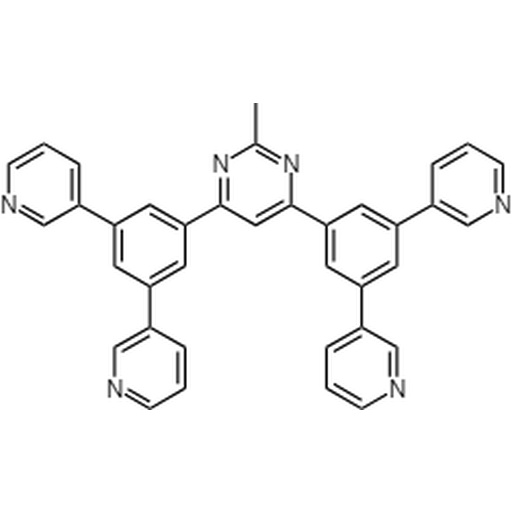
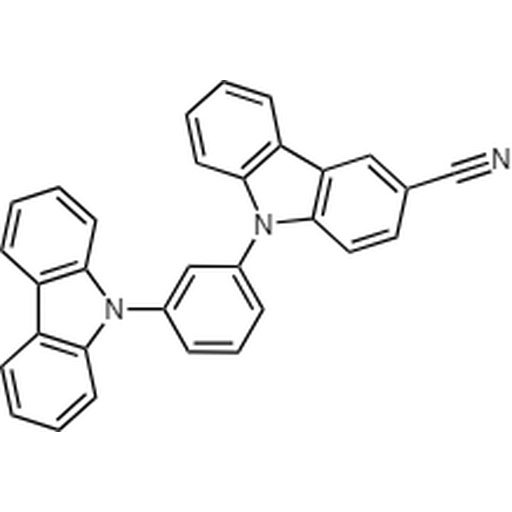
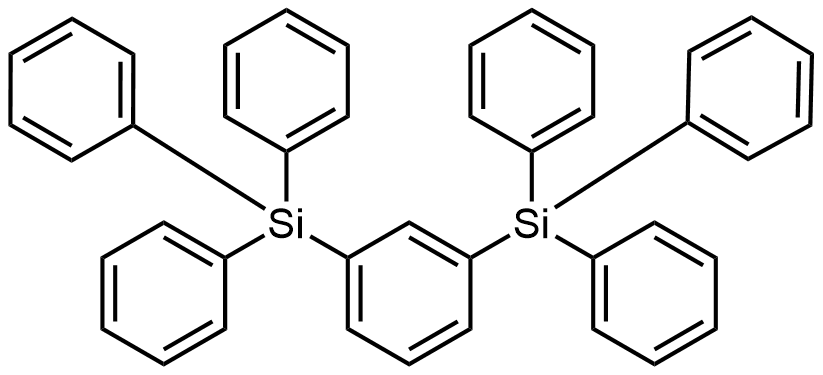
![CbBPCb, 1469997-91-8, 3,3'-Di(9H-pyrido[2,3-b]-indol-9-yl)biphenyl](https://noctiluca.old.semidea.pl/wp-content/uploads/2023/02/CbBPCb.jpg)