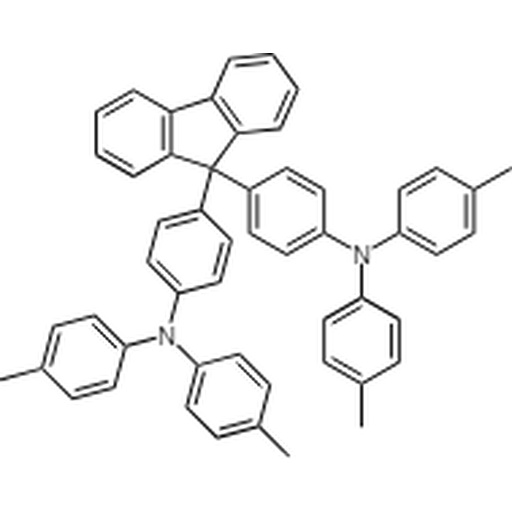
DTAF
| CAS number: | 159526-57-5 |
![Compound TmPyPB C39H27N3 , CAS number: 921205-03-0, Full name: 1,3,5-Tri[(3-pyridyl)-phen-3-yl]benzene](https://noctiluca.old.semidea.pl/wp-content/uploads/2023/02/TmPyPB.jpg)
TmPyPB
| CAS number: | 921205-03-0 |
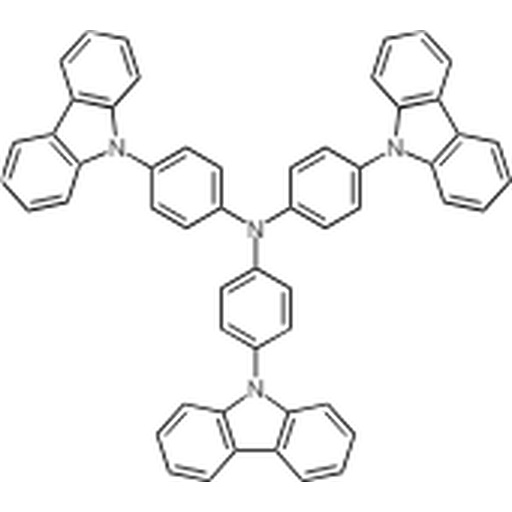
TCTA
| CAS number: | 139092-78-7 |
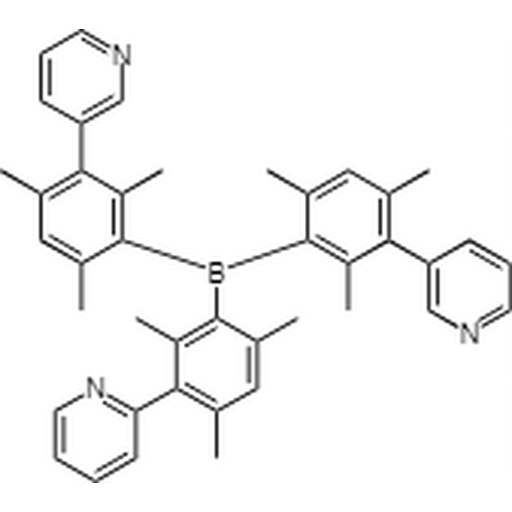
3TPYMB
| CAS number: | 929203-02-1 |
| CAS number: | 159526-57-5 |
| CAS number: | 921205-03-0 |
| CAS number: | 139092-78-7 |
| CAS number: | 929203-02-1 |
Host materials in the realm of Organic Light-Emitting Diodes (OLEDs) are one of the fundamental components that form the core of OLED displays and lighting systems. The efficiency and performance of OLED devices significantly depend on the development of both emitter and host materials. These materials, typically organic, are crucial in the emissive layers of OLEDs where they host the light-emitting molecules or dopants. The molecular architecture of host materials is intricately designed to facilitate efficient energy transfer to the emitters.
Efficiency and Stability: Host materials must balance efficiency and operational stability. High external quantum efficiencies (EQE) and current efficiencies (CE) are critical for commercial viability.
These properties ensure that host materials contribute effectively to the performance and longevity of OLED devices, making them suitable for practical applications in display and lighting technologies.
Host materials play a vital role in determining the efficiency, color spectrum, and longevity of OLED devices. Host materials play a crucial role in OLEDs, especially in enhancing the performance of Thermally Activated Delayed Fluorescence (TADF) emitters. Their ability to control and manage the movement and transfer of energy within the OLED layers directly impacts the device’s performance. From large-scale television screens and smartphones to advanced lighting solutions, the choice of host material is key to the commercial success and technological advancement of OLED products.
Due to the use of host materials, they can be divided into two basic groups: Fluorescent Host Materials (for Fluorescent and TADF OLEDs) and Phosphorescent Host Materials. Depending on the process by which light is emitted from the diode, individual materials must have different properties. Distinctions described below are critical for optimizing the performance and efficiency of each type of OLED.
Fluorescent OLEDs typically do not require as high a triplet energy level as phosphorescent OLEDs because they rely on singlet excitons for light emission. Fluorescent OLEDs also can use hosts with either unipolar or slightly bipolar charge transport properties. The balance of charge transport is less critical compared to phosphorescent OLEDs. While thermal stability and uniform film morphology are important, the requirements are less stringent compared to phosphorescent OLEDs. Stable amorphous morphology is still desired to prevent phase separation and crystallization.
Phosphorescent OLEDs require host materials with high triplet energy to ensure efficient energy transfer from the host to the triplet emitters and to prevent triplet exciton quenching. The triplet energy of the host must be higher than that of the emitter. Bipolar charge transport properties are crucial to balance holes and electrons in the emitting layer, which improves recombination efficiency and reduces efficiency roll-off in phosphorescent OLEDs. Bipolar hosts help achieve this balance better than unipolar hosts. Host materials for phosphorescent OLEDs need to exhibit high thermal stability with a high glass transition temperature (Tg) to prevent crystallization and maintain a stable film morphology during device operation. A Tg higher than 100°C is preferred.
Host materials are pivotal in a wide array of applications within the OLED industry. They are the backbone of the latest generation of OLED displays found in consumer electronics such as smartphones, televisions, and wearable devices, where they contribute to vibrant colors and deep blacks. In lighting technology, these materials enable the production of OLED panels that are not only more efficient but also thinner and more flexible compared to traditional lighting solutions. The choice of host material adapted to—whether fluorescent or phosphorescent OLEDs—directly influences the color rendering, energy efficiency, and lifespan of these OLED applications. Their versatility also extends to specialized fields such as automotive displays, where durability and performance under various lighting conditions are crucial. As OLED technology continues to grow and diversify, the role of host materials in pushing the boundaries of innovation and design in various industries becomes increasingly significant.
In summary, host materials are indispensable in the fabrication of OLED devices. These materials contribute significantly to the performance, efficiency, and quality of OLED displays and lighting systems. As a leading OLED material supplier, Noctiluca is committed to providing top-tier OLED host materials, catering to the evolving demands of the OLED materials market and contributing to the advancement of OLED technology.
Literature:
Noctiluca offers a wide range of high-quality host materials, each engineered to enhance the performance of OLED devices:
As a Noctiluca, we recognize the evolving needs of the OLED materials market and provide tailored solutions for host materials. If you do not find what you are looking for on our site, please do not hesitate to contact us. We are more than happy to discuss custom solutions and how we can meet your specific needs in the OLED industry.
Noctiluca’s host materials are high-purity organic compounds designed for use in the emissive layer (EML) of OLED devices. They serve as a matrix into which active dopants are introduced to generate light emission.
The host acts as an energy carrier and emission medium – it transports excitons to the dopant, enabling their effective transfer and minimizing energy losses. A proper host enhances efficiency, color, and device lifetime.
TADF hosts require a high triplet energy to avoid reverse exciton transfer. In contrast, phosphorescent hosts must have a lower triplet energy than the dopant yet high enough to prevent quenching or parasitic recombination.
Key features of a good host include: high triplet energy, appropriate HOMO/LUMO levels, thermal stability, high purity, energy compatibility with the dopant, and processability (e.g., sublimation readiness).
Depending on the compound, HOMO levels typically range between −5.5 to −6.2 eV, and LUMO levels between −2.0 to −3.0 eV. Specific values are provided in each product’s technical data.
Yes, host materials are designed to ensure compatibility with both TADF and phosphorescent dopants, enabling effective activation while minimizing energy loss.
Yes, these are materials dedicated to the EML layer, with structures and energy levels enabling precise exciton management and efficient light generation within the active layer.
For selected products, triplet energy (ET) values are provided, typically expressed in eV. These data are crucial when matching the host to a specific dopant and are available in the technical documentation.
A well-matched host material can increase quantum efficiency (EQE), stabilize excitons, and reduce degradation of active materials, directly contributing to longer device operational life.
Available data include molecular weight, purity (≥99.5% HPLC), and melting or sublimation temperature, essential for designing the vacuum deposition process.
Yes, many materials are offered in sublimated form, pre-purified to high standards, and ready for use in thermal vacuum evaporation processes.
Materials are available as powders or sublimated solids, depending on the processing requirements and customer needs.
Yes, Noctiluca’s host materials feature high thermal stability, making them suitable for vacuum processing without degradation.
Yes, some host materials are optimized for top-emission or bottom-emission OLEDs, with specific optical and structural properties matched to the device architecture.
Yes, singlet, triplet, and excitation energy data are available for selected host materials. These can be obtained upon request from the technical team.
The typical specification is ≥99.5% purity (HPLC), which meets OLED requirements and minimizes electronically active impurities.
Yes, host materials are suitable for both single-layer EMLs and multilayer architectures, depending on the energy design and device requirements.
Yes, materials can be tailored or selected based on dopant type, emission mode, energy alignment, or deposition technology.
Orders can be placed via the contact form on the product page. Please provide company information, desired quantity, and intended application.
©2025 noctiluca. All rights reserved.
General Contractual Terms and Conditions and Information for Customers | Privacy policy
Made with passion by Panda Marketing